
Tesla & EV Wheel Alignment in Fremont, CA
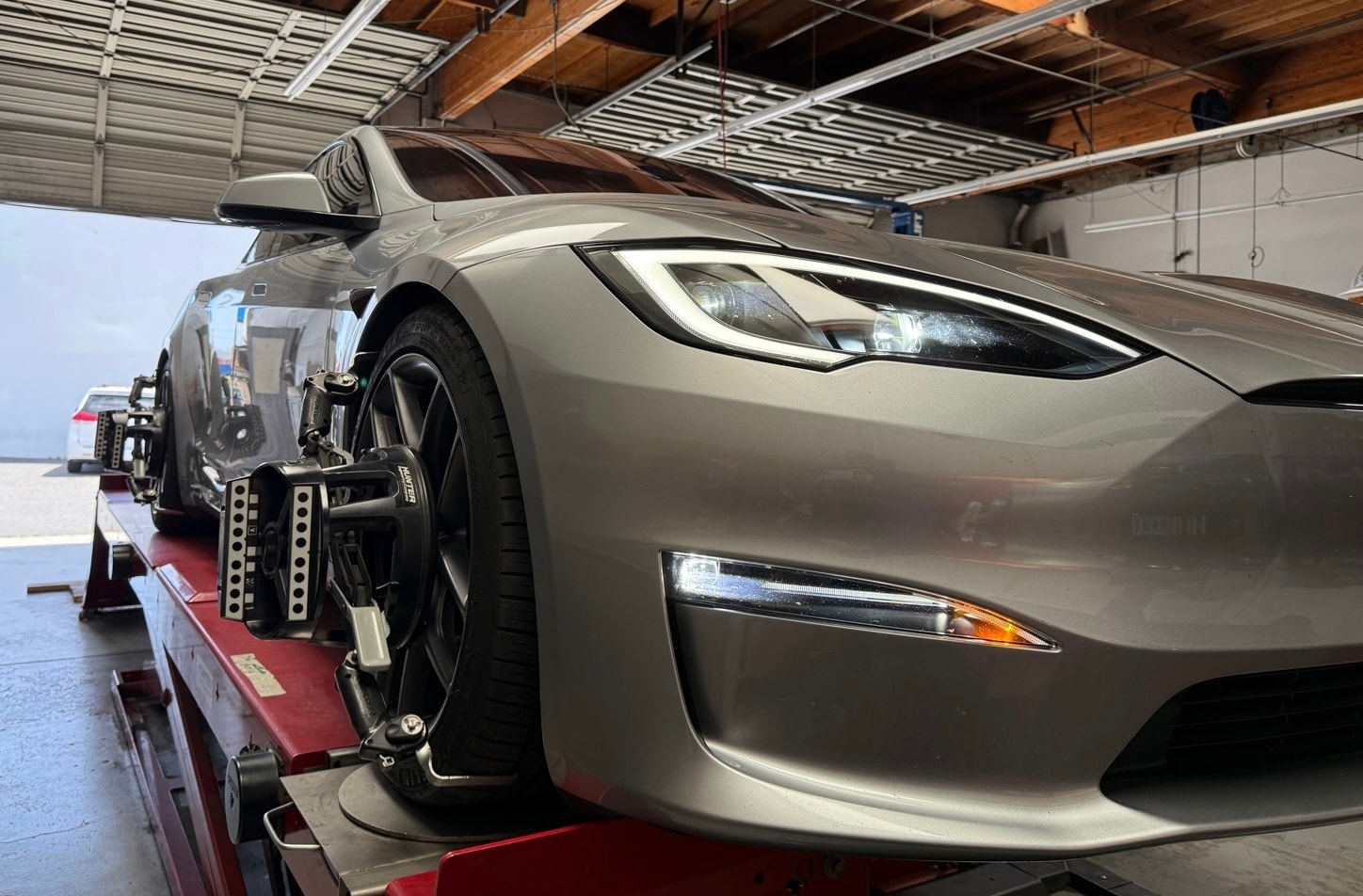
Precision four-wheel alignment for Tesla Model S, Model 3, Model X and Model Y, plus many other electric vehicles. Fremont Alignment uses Hunter HawkEye Elite technology and provides Tesla steering-angle calibration and reset services when required.
Tesla & EV Alignment Starting at $130
Final pricing depends on the vehicle, its condition, required adjustments and calibration requirements.
- Alignment-Only Specialists
- Hunter HawkEye Elite Technology
- Tesla Steering-Angle Calibration
- Many Standard Appointments Completed in About 30 Minutes
Tesla and EV Alignment Specialists in Fremont
Fremont Alignment is an alignment-focused shop serving Tesla and electric-vehicle owners in Fremont, Newark, Union City, Milpitas and nearby Bay Area communities.
Wheel alignment is not simply one service among dozens at our shop — it is our specialty. Our work is focused on measuring wheel geometry, making the available mechanical adjustments and helping vehicles track correctly according to the applicable alignment specifications.
We provide four-wheel alignment for Tesla Model S, Model 3, Model X and Model Y vehicles. We can also align many other electric cars and SUVs. Owners of other EV brands should call with the vehicle's year, make and model to confirm availability.
We do not sell tires, balance wheels or replace suspension components. This specialized approach allows us to concentrate on precision wheel alignment.
Why Proper Alignment Matters for a Tesla or EV
Proper wheel alignment helps a Tesla or other electric vehicle track straight, maintain predictable steering and use its tire tread more evenly.
Alignment describes the direction and angle at which the wheels travel. When toe, camber or another alignment measurement is outside specification, the tires may scrub against the road instead of rolling naturally.
This unnecessary scrubbing can contribute to premature or uneven tire wear. In some cases, wear develops on the inner shoulder of the tire, where it may not be immediately visible from outside the vehicle.
Incorrect alignment can also contribute to:
- Pulling or drifting left or right
- A steering wheel that is crooked while driving straight
- Wandering or frequent steering corrections
- Uneven inner- or outer-edge tire wear
- Reduced steering stability
- Front and rear wheels that do not track in the same direction
Alignment cannot prevent every type of tire wear. Tire pressure, tire construction, driving style, wheel balance, vehicle load, suspension condition and modifications can also affect how tires wear.
However, maintaining the correct wheel angles helps prevent unnecessary tire scrubbing caused by misalignment.
When Does Tesla Recommend Wheel Alignment?
Tesla recommends scheduling wheel alignment as needed rather than following one fixed mileage interval for every vehicle.
Tesla states that an alignment may be needed when:
- The tires show uneven wear
- The vehicle pulls left or right while the steering wheel is held straight
- A new set of tires has been installed
An alignment check may also be appropriate after hitting a pothole or curb, following steering or suspension work, or after noticing a change in steering-wheel position or vehicle handling.
Signs Your Tesla or EV May Need an Alignment
- Uneven wear on the inner or outer edges of the tires
- Feathered or rough tire tread
- Vehicle pulling or drifting to one side
- Crooked steering wheel while driving straight
- Vehicle wandering at highway speeds
- Steering that feels different after a pothole or curb impact
- New tires were recently installed
- Steering or suspension work was recently completed
- The vehicle has been lowered or modified
- The rear wheels appear to travel in a different direction from the front
Pulling is not always caused by alignment. Unequal tire pressure, tire construction, uneven tire wear, worn or damaged components, brake problems and normal road slope can also cause a vehicle to drift.
What We Measure During an EV Four-Wheel Alignment
A four-wheel alignment measures the relationship between all four wheels and the vehicle's geometric centerline. The primary measurements include toe, camber, caster and thrust angle.
Toe
Toe describes whether the fronts of the tires point inward or outward when viewed from above. Even a small incorrect toe angle can cause the tires to scrub sideways as the vehicle travels. Incorrect toe is a common cause of rapid feathered tire wear and may contribute to unstable steering or a steering wheel that is not centered.
Camber
Camber is the inward or outward tilt of a wheel when viewed from the front. Excessive negative camber may contribute to inner-shoulder tire wear. Excessive positive camber may contribute to outer-shoulder wear. Some camber is intentionally designed into the vehicle, but it should remain within the applicable range.
Caster
Caster describes the forward or backward angle of the steering axis when viewed from the side. Caster influences straight-line stability, steering feel and how naturally the steering returns toward center after a turn. Caster is not adjustable on every vehicle.
Thrust Angle
Thrust angle describes the direction the rear wheels travel compared with the vehicle's centerline. An incorrect thrust angle can contribute to an off-center steering wheel or unusual tracking.
Why Four-Wheel Alignment Is Important for EVs
Checking only the front wheels does not provide a complete picture of how a modern Tesla or electric vehicle travels.
Four-wheel measurement allows the technician to evaluate the front wheel angles in relation to the rear wheels and the vehicle's thrust line. This information is important for centering the steering wheel and helping the wheels travel in a coordinated direction.
Even when a particular rear measurement is not factory-adjustable, measuring it can reveal useful information about the vehicle's alignment, suspension position or possible mechanical damage.
Hunter HawkEye Elite Alignment Technology
Fremont Alignment uses Hunter HawkEye Elite wheel-alignment technology.
The system uses high-resolution cameras and wheel-mounted targets to measure the alignment position of each wheel. It provides precise readings for camber, toe, caster and other four-wheel alignment measurements.
The measurements are compared with the specifications available for the selected year, make, model and vehicle configuration. Our technician can then make the factory-provided mechanical adjustments that are available on the vehicle.
Our Tesla and EV Alignment Process
- 1Confirm the vehicle's year, model, configuration and modifications
- 2Position the vehicle on the alignment rack
- 3Attach Hunter targets and measure all four wheels
- 4Review toe, camber, caster and thrust angle
- 5Compare with factory specifications
- 6Adjust available factory alignment points
- 7Center steering wheel
- 8Recheck measurements
- 9Perform steering-angle calibration if required
- 10Verify final results
Not every alignment angle is adjustable on every Tesla or EV. Fremont Alignment does not replace suspension components.
Tesla Steering-Angle Calibration and Resets
The steering-angle sensor provides steering position data to the vehicle.
After mechanical alignment and steering-wheel centering, some Tesla vehicles may require a steering-angle calibration or reset.
Mechanical alignment and electronic calibration are separate procedures. Not every vehicle requires calibration.
Tesla Models We Align
Tesla Model 3 Wheel Alignment
Four-wheel alignment for Model 3 vehicles experiencing uneven tire wear, pulling or steering issues.
Tesla Model Y Wheel Alignment
Precision Model Y alignment addressing tire wear and tracking concerns.
Tesla Model S Wheel Alignment
Four-wheel alignment with evaluation of available adjustment points.
Tesla Model X Wheel Alignment
May require additional procedures depending on configuration and condition.
Alignment for Other Electric Vehicles
Fremont Alignment services many EVs beyond Tesla. Call with vehicle details to confirm availability.
Tesla Alignment vs. Wheel Balancing
Wheel Alignment
Corrects wheel angles and direction
Wheel Balancing
Corrects weight distribution in tire/wheel assembly
Fremont Alignment specializes in alignment only.
Tesla and EV Alignment Pricing
Tesla and EV wheel alignment starts at $130.
Final pricing depends on vehicle condition, configuration, adjustments and calibration needs.
How Long Does It Take?
Many appointments take about 30 minutes depending on vehicle condition and required adjustments.
Modified, Lowered or Lifted Electric Vehicles
Modified vehicles may affect alignment range and results. Warranty exclusions apply. Call us with your vehicle details before scheduling.
Why Tesla and EV Owners Choose Fremont Alignment
- Alignment-only specialists
- Hunter HawkEye Elite technology
- Tesla experience
- Four-wheel measurements
- Transparent pricing
- Fremont location
Tesla and EV Wheel Alignment FAQs
Schedule Tesla or EV Wheel Alignment in Fremont, CA
Fremont Alignment40869 Albrae Street
Fremont, CA 94538
(510) 304-0890
Fremont Alignment is an independent wheel alignment business and is not affiliated with Tesla, Inc.